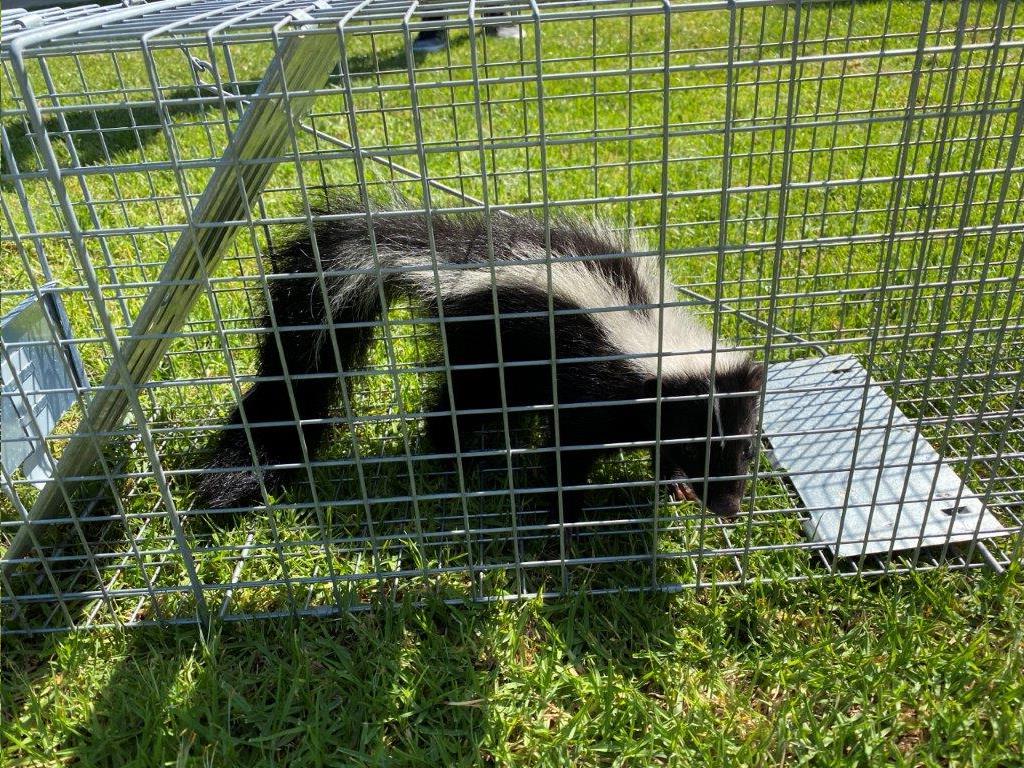
Skunks sleep mainly in dens of their own making, and they create these dens using their long claws. It is important to know that skunks are very adaptive creatures, as such they are capable of creating dens both in rural and urban areas. The dens themselves are usually made by the skunk, but they sometimes use dens built by other animals that are no longer in use. Examples of these are the dens of foxes and woodchucks. There is also the off chance that a skunk may opt to live on hollowed logs, woodpiles, or even brushes depending on its environment. Their homes are usually found in places that have an abundant amount of food and water in the surrounding area. This is why skunks can also be spotted in human-inhabited areas like under porches, sheds, or any dark enclosures around a person’s home. Any structure near the house is also a potential location for a skunk to live in such as a shed in the backyard. When not inhabiting a human infested area, they also live in forests, woodlands, grasslands, and deserts. Skunks are also known to be nocturnal, meaning they go out at night to look for food and usually sleep for the rest of the day until they are awoken.
Like most wildlife animals, skunks like digging their shelter under things that they consider as safe and protective. This can be fallen logs, stumps, hollow trees, and even urban spaces like sheds, garages, and under your deck or patio. These kinds of skunk holes will be around 8 inches in diameter, and will be deep enough that you cannot see the bottom of the hole. Sometimes, skunks can even dig as deep as a foot underground, due to their very sharp and strong claws.
Tips
If you want to prevent skunks from digging through your beautiful landscape, or through your well-cared-for crops, purchase bird netting (also called fruit tree netting) from your local garden shop and lay the netting on the ground. Try to bunch up the edges like you are building up “valleys” on the sides of the net. This will discourage skunks from even stepping into them since they think it is dangerous.
Skunks are also really bad at climbing and jumping, so installing even a 3-foot fence along your property line can keep skunks and other wildlife away. It also saves you money as you won’t have to invest in further pest control. Be sure that the fence you’re making is a tight one, as these little creatures can fit in holes as small as 4 inches. Also, be sure to bury your fence and stake at least 6 inches under the ground to prevent them from digging under it. This method is actually one of the most successful ways to keep out unwanted animals from your property.
Go back to the Indian Trail wildlife removal home page.